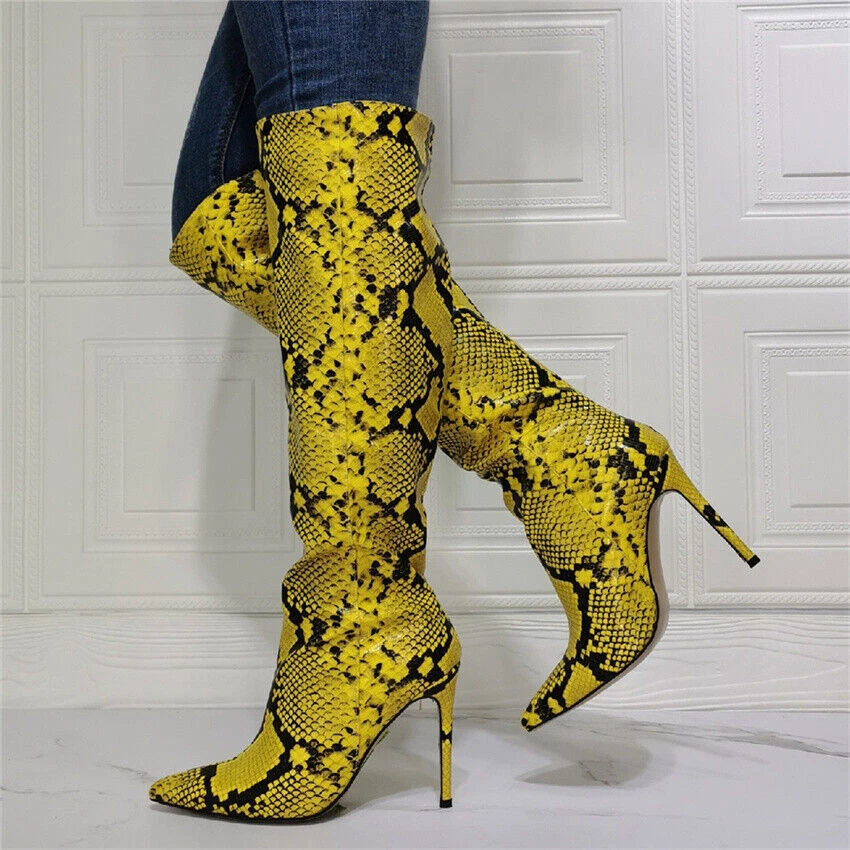
Who cares about snakes — they're gross and dangerous, and have to be killed anyway. Want to look dangerous in a tasteful way? Reptile-skin accessories are this spring's hottest trend.
Layers traversed: L06, L07, L08, L11, L13, L15, L16, L17. Operators invoked: Psi, Gamma, K, rho, the optimisation axiom, G.
I. The Lawful Processing of a Voice
What follows is the procedural skeleton, recovered from contemporary Arab chronicles and later compendia, of a case heard in Aleppo in or near 1417 CE. The accused, Seyyid Imadaddin Nasimi, was a Hurufi poet of Azerbaijani Turkic origin, then resident in Aleppo as a Hurufi sheikh with a growing following. The procedure may be summarised, in the unsentimental register of administrative law, in the following stages.
Stage 1 — Denunciation. A group of Sunni scholars affiliated with the established schools of jurisprudence brought charges before the Mamluk deputy of Aleppo. The charges, as reported by Ibn Hajar al-Asqalani and other contemporaries, alleged that Nasimi taught that the human face and body bore the inscription of God's names — the central tenet of Hurufism — and that he proclaimed personal divinity in a manner echoing the earlier execution of al-Hallaj. Initial proceedings against him on the basis of vague rumour failed to secure the desired outcome.
Stage 2 — Forum-shopping. Failing at the local Maliki court — a court reportedly unwilling, on the available evidence, to certify apostasy — the Mamluk deputy referred the case to Cairo, to the Mamluk sultan al-Mu'ayyad Shaykh (r. 1412–1421). The case ascended out of jurisprudential reluctance into political expediency. Akhmad ibn Ibrahim al-Halabi's Tarih-i Heleb records that the order to execute came from secular authority — the emir of Aleppo seeking to forestall open rebellion — rather than from the religious court itself.
Stage 3 — Verdict. Death by flaying, the body to be displayed publicly in Aleppo for seven days. The juridical purpose of the seven-day display is not concealed: it is communicative. The body is an inscription, addressed to the city.
Stage 4 — Execution. Carried out, on most reconstructions, in 1417 (some sources 1418/19, occasionally 1404). The Turkologist Michael Hess has noted that contemporary sources do not unambiguously confirm that the flaying was performed ante-mortem; some texts imply the flaying was a posthumous public-display operation. For our purposes the distinction is forensically interesting but narratologically inert: the protocol's intent — to remove the surface that bears the message and present its absence as a warning — does not depend on the order in which the operations are performed.
Stage 5 — Folklore inversion. Almost immediately, the procedure begins to fail at the level of its own communicative goal. A legend grows up that Nasimi mocked his executioners with improvised verse and, after the execution, draped his flayed skin around his shoulders and walked away. A second, sharper legend — the so-called blood-finger parable — circulates: when a juridical official rules that any fingertip touched by the apostate's blood must be amputated, Nasimi (or his memory; the historical attribution is unstable) extends the regulation to its logical conclusion and asks what then is required of those who are bathed in his blood. Six centuries later he is canonical in Azerbaijani, Turkish, and Persian; his tomb in Aleppo remains a place of pilgrimage; UNESCO marked the 600th anniversary of his birth in 1973. The skin was destroyed. The protocol propagated.
This is the cold opening of the present post for an exact reason. The case of Nasimi is not a curiosity of late-medieval Mamluk jurisprudence. It is a clean instance of a procedure whose substrate-invariant structure recurs across radically different historical and biological contexts. To name that structure precisely, and then to follow it through three further instantiations — the modern grammar of dissent-pathologisation, the Manukyan–Milinkovitch result on lizard skin as a computational substrate, and the boutique trade in reptile leather — is the work of this post.
II. The Protocol, Formalised
In Draken's notation, a protocol is the tuple {S, R, φ, σ}: a state space S, a rule set R, an interface φ that selects which state-features propagate to neighbouring nodes, and a selection function σ that scores trajectories. A protocol is substrate-invariant when the same {S, R, φ, σ} can be realised in radically different physical, biological, or institutional substrates while preserving its functional signature.
The procedure that processed Nasimi instantiates a particular protocol — call it Π_orth, the orthodoxy-preservation protocol — whose rule set may be described as follows:
- Identify narrative content N that, if propagated, would force revision of the legitimating frame F of the current ruling order.
- Pathologise N by rewriting it in a category whose extension is already excluded by F (apostasy, treason, extremism, mental illness, alien ideology, foreign hostile influence).
- Decorticate the carrier of N — destroy the surface (the body, the press, the platform, the channel) that allows N to circulate.
- Display the destroyed carrier as evidence that propagation of N produces destruction, thereby closing the loop and reinforcing F.
Π_orth has a specific failure mode that the analytic literature on coherence has identified repeatedly. In Drakenian terms, Π_orth produces local closure (the verdict satisfies F internally — Ψ_local → 1, the narrative loop seals) at the cost of global incoherence: the destroyed carrier is rapidly replaced by its own absence, which becomes the most efficient possible vector for N's propagation. Martyrology is the technical name for this inversion. A flayed Hurufi sheikh in 1417 produces, by the operation of his flaying, a sheaf-section that cannot be glued away — Nasimi's verses, his name, the legend of his death — which then propagates over textual substrates that the original juridical apparatus could not reach. The coherence debt accumulates as
$$ K(t) \;=\; \int_0^t \big[\Psi_{\text{Î }_{\text{orth}}}(\tau) \;-\; \Psi_{\text{viable}}\big]\cdot w(\tau)\, d\tau $$
with Ψ_Π_orth → 1 (perfect local self-reference) and Ψ_viable substantially lower. K accumulates over centuries; the bill is paid by every successor regime that finds Nasimi already canonical and the Mamluk sultanate a footnote.
This is the formal heart of the matter. The protocol that destroys the carrier of a message that threatens the current frame produces, by that destruction, a more durable carrier of the same message, in a substrate the protocol cannot reach. Writing on this site has called this the kayfabe trap, in homage to Sam Goldman's professional-wrestling-derived diagnostic: the scripted reality is locally coherent but globally fails to glue. Π_orth is a kayfabe-generator. It cannot help being one. The conditions under which it operates — the need for spectacle, the need to be witnessed — are precisely the conditions under which it broadcasts the very narrative it intends to suppress.
III. The Modern Instantiations
The reader who imagines that Î _orth is a medieval theological curiosity has not been paying attention to the present century. The protocol has been instantiated, in fully recognisable form, throughout the long twentieth century and well into ours.
The literature and intellectual scaffolding of socialist revolution and democratic-progressive reform, in their twentieth-century forms, were rewritten — by a coalition of state actors, capital interests, and a willing press — as treasonous communist sympathy, as enemy-puppetry, as the foreign-controlled prelude to authoritarian mind-control dictatorship. Internationalism was rewritten as Communist takeover and global domination, the prelude to the elimination of Western civilisation. Rational discourse and the scientific-economic synthesis born from the Enlightenment were stamped out wherever they cohered into successful reforming institutions; the institutions were demonised and the people staffing them defamed. Capital was rewritten as the rightful, sacrosanct property of "hard-working citizens" whose right to own the means of production, to invest, and to specify the terms by which any new investment is measured — including the singular metric of owning more while providing as little as possible — became the unchallengeable ground of legitimacy. Any alternative perspective on legitimate rule became, by definitional fiat, unlawful extremist propaganda. Labour movements threatened profit margins, therefore labour movements were demonised as a global hivemind plot — the imminent purge of individuality, the destruction of liberal ideas, the impending ethnic cleansing of white men by feminists, by communists, by Jews, by globalists, by the reptilian Illuminati. The pathologisation is total. It is not us, it is them. It is never me; not all men; all lives matter. So the heretic is skinned and the infidel is bombed and the bottom line is preserved. Business as usual. It will never end.
This passage is not satire. It is a phenomenological catalogue of the modern grammar of Π_orth, written in the voice of those who instantiate it. The function of the catalogue is to make visible that the protocol is not "right-wing" or "left-wing" in any first-order political sense; it is a meta-protocol of frame-preservation that recruits whatever ideological vocabulary is locally available. The same {S, R, φ, σ} that processed Nasimi processed McCarthy's witnesses, processed Salvador Allende's economists, processes today's climate scientists and labour organisers and the Iranian dead of 2026. The substrate changes — courts to subcommittees to coups to algorithmic moderation to airstrikes — and {S, R, φ, σ} is preserved.
In every case the diagnostic signature is identical: local coherence purchased at the cost of global incoherence. Ψ_local → 1; Γ_global → 0; K accumulates. The frame seals itself by destroying the carriers that would let in the corrective signal. And in every case the destroyed carrier returns: as samizdat, as posthumous canon, as the suddenly-mainstream knowledge that the demonised analysis was substantially correct after the demonisers have died. Decortication broadcasts.
IV. The Hurufi Tesi: Skin as Restriction
To understand why the operation of skinning is specifically the operation that fails most spectacularly — why decortication and not, say, immurement — we need to attend to the ontological claim that Nasimi was killed for making.
Hurufism, as systematised by Fadlallah Astarabadi in the late fourteenth century before his own execution by Miran Shah, is a doctrine in which the letters of the Arabic-Persian alphabet (28 in Arabic, 32 in Persian) are read as ontological primitives, and in which the human face and body are literal inscriptions of the divine names. The human form is treated as a divine script; the doctrine fostered underground networks of adherents and was disseminated through poetry that equated the human soul with God. The hairline, the brow, the configuration of the features — these are read as a manifest writing-down of attributes that, in a different vocabulary, we would call ontological primitives.
In Drakenian formalism this is not metaphor. It is a thesis about the structure of restriction maps. The hurufi claim, decoded, is that there exists a sheaf F_divine over the manifold of created reality, with sections in the higher conceptual layers (call them L_high), and that there exists a restriction map
$$ \rho_{\text{high} \to L06}: \; F_{\text{divine}}(L_{\text{high}}) \;\longrightarrow\; F_{\text{divine}}(L06_{\text{skin}}) $$
whose image — the human skin and face — is a faithful projection of the upper-layer sections. The inscription is not symbolic. It is the tactile-readable boundary at which the upper-layer structure becomes manifest in L06 (Embodied Cognition). In sheaf-theoretic terms, the consistency of Ï is what makes F_divine a sheaf at all; severing it doesn't strip a decoration from a substance, it dissolves the gluing that makes the sheaf a coherent object.
This is the reason the executioners chose flaying. They understood, perhaps better than they could articulate, what they were attempting. The intention was to perform an inverse of Ï: to remove the inscription-bearing surface while preserving the "substance" — the juridical-theological body of the orthodox community whose purity required the deletion. Forget the skin. Keep the substance. It is a cleanly-formulable operation in any sheaf-naïve ontology. It is also categorically incoherent. You cannot invert Ï. The image is not detachable from the gluing structure; the gluing structure is the sheaf.
What you can do is delete the local domain of Ï. You can destroy this man, this skin, this carrier. What you cannot do is delete the protocol of which the carrier was the local manifestation. The protocol — the hurufi reading of inscription, the formal claim about Ï's faithfulness — relocates to a different substrate (text, commentary, oral tradition) and continues to be available, often more durably than the original substrate could have made it. Six hundred years on, the textual sheaf F_text glues sections that the dermal sheaf F_skin could only have carried for a single human lifetime. The procedure produced its inverse.
The blood-finger parable concentrates this with such elegance that one suspects later transmission of having sharpened it. The qadi rules, locally: blood touched the finger, finger must be amputated. Nasimi's reply is a sheaf-gluing argument disguised as a joke. If your local rule for blood-contamination requires amputation of the finger, then what does global gluing require of those whose entire bodies are bathed in my blood? The local rule does not satisfy the consistency condition under which it could be extended to a section over the global manifold of blood-contact events. Ψ_qadi → 1 (the local juridical loop seals on its own terms); Γ_qadi → 0 (the rule fails to glue globally). Nasimi exposes the incompatibility of the restriction maps with a single verse. This is not rhetorical wit. It is the formally correct diagnostic move.
V. Manukyan, Milinkovitch, Smirnov: Skin as Computation
We turn now to a result published in Nature in 2017 that, read in the present context, has the force of a quiet philosophical bombshell. Manukyan, Montandon, Fofonjka, Smirnov, and Milinkovitch demonstrated that in the ocellated lizard Timon lepidus, the labyrinthine green-and-black pattern visible on adult skin is produced by a cellular automaton — a discrete computational system in which each scale changes state (green or black) according to the states of its neighbouring scales, on a quasi-hexagonal lattice. Using mathematical derivation and numerical simulation, the team identified how a discrete von Neumann cellular automaton emerges from a continuous Turing reaction–diffusion system: the variation in skin thickness generated by three-dimensional scale morphogenesis causes the underlying reaction–diffusion dynamics to separate into microscopic and mesoscopic spatial scales, with the latter generating a cellular automaton. The conclusion the authors draw is precise: cellular automata are not merely abstract computational systems but can directly correspond to processes generated by biological evolution.
What this means, stated bluntly, is that the lizard's skin is a literal computer. It is the first 2D cellular automaton ever identified as running natively on a living substrate. Each scale is a discrete state cell. The neighbours are first-order topological neighbours on the quasi-hexagonal lattice. The update rule is implemented in the chromatophore biochemistry, instantiating a discrete approximation of the Turing reaction–diffusion equation that the 3D geometry of the scales themselves carves out of the continuous chemistry. The skin is not "patterned" — it computes its pattern, scale by scale, over the four-year developmental window in which juvenile brown scales flip to green or black and continue to flip thereafter.
This is, in Drakenian terms, the empirical demonstration that the Ï_{L02→L06} restriction map — from molecular thermodynamics through bioelectric integration up to the embodied colour-pattern surface — is a literal computation, not a passive expression. Subsequent work has refined the picture: Zakany, Smirnov, and Milinkovitch (2022) showed that the same labyrinthine patterns can be efficiently captured by a Lenz-Ising model, with the skin-scale states behaving as ±1 spins coupled to first-neighbour interactions, and the precise location of green and black scales being less important than the general energetic appearance of the final pattern. What evolution selects for, that is to say, is a region of the energy landscape, not a specific configuration. The skin is not a fixed text. It is a sampled solution in a metastable manifold of camouflage-equivalent patterns.
Alan Turing's 1952 Chemical Basis of Morphogenesis — written two years before his prosecution under the Labouchere Amendment for homosexual acts, his conviction, his chemical castration, and his death — is vindicated, sixty-five years after his death, by the discovery that the morphogenetic mechanism he proposed runs natively in lizard skin and discretises into a von Neumann automaton when the scale geometry is taken into account. Two procedures of decortication, separated by half a millennium, return their ghosts: Nasimi as canon, Turing as the foundational mathematician of the substrate his executioners refused to recognise as a legitimate computational object. Π_orth, again, broadcasts.
VI. Conway's Bridge: One Rule-Set in an Infinite Class
A methodological clarification is required here, and it is also the crucial conceptual move of the post. The Manukyan automaton is one specific rule-set in the space of all cellular automata — a particular update rule, on a quasi-hexagonal lattice, biochemically implemented in a specific clade of squamates. It happens to produce frozen labyrinthine attractors of the kind Wolfram (1984) would classify as Class 2: stable patterns, no propagating coherent structures. The paper, taken on its own narrowest reading, demonstrates that one rule-set in the CA family runs natively on a living substrate. This is already a major result. The far more consequential implication is what happens when this empirical existence-proof is composed with what is already known about cellular automata as a class.
The pedagogical bridge — and the conceptual link this post turns on — is Conway's Game of Life, formulated by John Horton Conway in 1970 and disseminated through Martin Gardner's Scientific American column. The Game of Life is a 2D cellular automaton on a square lattice with a binary state space and a four-rule update of almost trivial simplicity. Within months of its publication, it was discovered to support — entirely as emergent consequences of those four rules — the full taxonomy of objects that this post needs to name:
- Static configurations (still lifes — block, beehive, loaf) — the analogue of the labyrinthine attractor in the lizard, the local-energy-minimum that the Lenz-Ising reformulation (Zakany et al. 2022) makes formally precise.
- Oscillators — periodic configurations that return to themselves after a fixed number of steps (blinker, toad, pulsar) — the analogue of any cyclic process: heartbeat, circadian rhythm, breathing, ritualised display.
- Gliders — propagating coherent objects that translate across the lattice while preserving their internal configuration (Richard Guy, 1970) — the analogue of any object that maintains its identity while moving across a substrate. The first synthetic agent.
- Glider guns — stationary configurations that periodically emit gliders (Bill Gosper, 1970) — the analogue of any source that continuously produces propagating agents: a generative organism, an institution, a meme-factory.
- Replicators — configurations that produce copies of themselves — the analogue of reproduction. Self-replicators in Life were progressively constructed and culminated in Andrew Wade's Gemini (2010), a self-replicating pattern that copies an arbitrary pattern over an arbitrary distance.
- Universal computation — Life is Turing-complete: in 2002 Paul Rendell published an explicit construction of a Turing machine in the Game of Life, ratifying the existence-proof Conway, Berlekamp, and Guy had sketched in Winning Ways (1982). Anything that can be computed can be computed inside a Conway grid. The simplest possible CA rule-set in two dimensions already contains universality.
Now place these two facts side by side and let the composition land. Manukyan et al. (2017) prove that cellular automata are not abstract toys but literal computational objects running natively on biological substrates. Conway-Berlekamp-Guy-Gosper-Rendell prove that cellular automata as a class support arbitrary emergent complexity, up to and including universal computation, gliders, glider guns, and unbounded replication. The composition of these two results yields a single, large claim that this post takes as foundational:
Biological substrates can, in principle, host cellular automata of arbitrary computational depth — including configurations that support propagating coherent agents, self-reproducing patterns, hierarchies of emergent agency, and universal computation — and the Manukyan finding is the first empirical attestation that this is not merely possible but actual.
The lizard's skin is a Class-2 rule-set instantiated in chromatophores and reaction-diffusion biochemistry. The same biochemical machinery — excitable media, threshold dynamics, neighbour coupling, geometric discretisation — is, in principle, capable of instantiating Class-4 rule-sets. Whether any clade has done so is an open empirical question; that the substrate can support it is no longer in doubt.
VII. Stacked Cellular Automata, Agency, and Hierarchy
This composition is not a speculative philosophical extension. It is the foundational thesis of the Drakenian 18-layer architecture, restated in CA-theoretic vocabulary that the present post is in a position to make explicit. Each layer of the manifold is, in effect, a cellular-automaton-like substrate whose stable emergent objects become the cells of the next layer up. Molecular thermodynamics (L02–L03) produces the stable objects we call cells (L04 bioelectric integration). Cellular networks produce the stable objects we call organisms (L05 neural integration → L06 embodied cognition). Embodied organisms produce the stable objects we call dyadic signals and group cognition (L08 → L09). Group dynamics produces social coordination, then economic cognition, then national narratives, then political strategy, then economic topology, then cultural fields, then institutional morphology, then civilizational memory, and finally L18 planetary cognition.
Each layer is a CA whose update rule is the previous layer's emergent dynamics. The cells of layer L_{i} are the stable propagating objects of layer L_{i-1}. The neighbours are the topological adjacencies that the previous layer's substrate makes possible. The interaction rule is whatever effective dynamics the lower layer produces when its emergent objects are coupled. Evolution, on this view, is the gluing operation: it is agency stacked in overlaying patterns of hierarchy, in which each layer's emergent objects become the substrate of the next layer's computation, and the consistency of the gluing across layers is the condition under which any of it remains a coherent object.
This is exactly what the Drakenian restriction maps formalise. Each Ï_{L_{i+1} → L_i} is a sheaf-theoretic projection of the upper-layer sections onto the substrate that computes them. The faithfulness of Ï â€” the condition that the upper-layer object is recoverable from its lower-layer instantiation in the sense relevant to the gluing — is what allows the hierarchy to support cognition at the higher layers without losing its grip on the substrate at the lower layers. Reality, in this picture, is not a stack of independent ontological levels. It is a single sheaf whose sections are the stable emergent objects at each scale, glued together by restriction maps that express how each scale's objects are computed by the scale below. Local cognition (this organism, this thought) and global cognition (this civilisation, this planetary process) are sections of the same sheaf at different layers, and they cohere — they are recognisably part of the same reality — only insofar as the gluing holds.
The Manukyan result, on this reading, is much more than a charming biological curiosity. It is the empirical demonstration that the gluing is literally computational at the layer where the human gaze first touches it: at L06, at the surface of the body, the substrate is performing a discrete computation that produces the pattern we call camouflage and which is, simultaneously, a partial readout of the entire stack of computations beneath it. The skin computes. The pattern is the trace of that computation. The labyrinthine green-and-black is a sampled metastable solution in the Lenz-Ising landscape of a sheaf-section that the organism's developmental program has selected, over its lifetime, in conformity with the optimisation pressures of its ecology. None of this is metaphor. All of this is empirical, literal, formally-statable.
We now have a name for objects that propagate across substrates while preserving their own structure: we call them agents. Or, when the substrate is the sky, we call them birds.
This is the moment to notice the linguistic-categorical sleight by which a continuity is erased. The class of organisms that we now call birds — Aves — is, on every contemporary phylogenetic reconstruction, the surviving lineage of theropod dinosaurs. Birds did not "evolve from dinosaurs" in the sense of having displaced their ancestors; they are a clade of dinosaurs, the surviving branch of a 250-million-year reptilian global hegemony that the Cretaceous-Paleogene impact pruned but did not eliminate. The taxonomic label "bird" is a functional sticker — small, feathered, flies — that carries a partial, polished phenomenology and an aesthetic of innocence (songbirds, doves, peace) while quietly excising the lineage history of the lizard-foot, the dinosaurian respiratory architecture, the scaled-leg, the toothless beak that is a modified jaw. Dragons, popularly understood as fictional, are an iconic memory of the actual ancestors of the things that perch on bird-feeders. The label "bird" performs a categorical decortication: it preserves the surface and discards the lineage.
When you stand at the lake on a spring morning and watch geese fly overhead, you are watching gliders propagate across an atmospheric substrate, instantiating a behaviour that emerged from a 250-million-year computation run on reptile bodies, of which their feathered-and-beaked lineage is the surviving branch. The categorical move that calls them birds and not flying lizards — fågel and not flygande ödla — is a small instance of the same protocol that called Nasimi an apostate and not a metaphysician. It preserves the locally legible surface and severs the glue.
VIII. The Snake-Skin Boot
Which brings us to the image at the head of this post. The boot.
Polished python. Or perhaps watersnake; perhaps farm-bred but plausibly wild-caught, given the volumes the global trade requires. Editorial lighting. The caption — "Who cares about snakes — they're gross and dangerous, and have to be killed anyway. Want to look dangerous in a tasteful way? Reptile-skin accessories are this spring's hottest trend." — is offered, in the actual fashion press, in a tone that is perfectly continuous with the rest of seasonal trend coverage: aspirational, light, slightly conspiratorial in its appeal to the reader's good taste.
What is the operation being performed here? It is the operation of Î _orth, transposed from juridical to aesthetic register and from human to non-human substrate, and it is the inverse of the operation performed on Nasimi.
On Nasimi: destroy the substrate; preserve the substance.
On the snake: destroy the substrate; preserve the surface.
In both cases the substrate is destroyed. The difference is which side of the restriction map Ï_{O→skin} the operator is trying to keep. Nasimi's executioners wanted to keep the juridical-orthodox sphere intact and discard the man who carried the message; reptile-skin fashion wants to keep the pattern — the texture, the gloss, the scale-architecture — and discard the organism that computed it. Both operations attempt to invert Ï. Both are categorically incoherent in exactly the way Hurufi metaphysics and Manukyan's empirical work, jointly, make explicit.
The pattern on the boot is not, ontologically, a pattern. It is the dead trace of a computation. The scales are the cells of an automaton. The labyrinthine arrangement is a sampled metastable solution in the Lenz-Ising landscape of the snake's developmental program. The colours are the integrated output of millions of biochemical update steps over the animal's life. To wear the skin is to wear a printout from a computer that has been switched off mid-calculation. The "value" the consumer assigns — exoticism, status, danger — is parasitic on a category error: the consumer believes the skin is the object, when the skin was always the surface of a process.
The Drakenian sheaf F(O) over the living organism O is high-dimensional. The dimensions include thermoregulation (the skin participates in heat exchange), predator-prey signalling (the pattern is camouflage selected over millions of years), conspecific identification (closely-related species distinguish themselves by scale-level pattern variation), embryological developmental constraint (the same morphogenetic mechanism that produces the pattern produces the lizard's body plan), population genetics, ecological niche construction, ritualised display in combat and courtship — in the case of varanids, the dyadic bipedal clinch protocol whose 130-million-year refinement is one of this site's central concerns. The consumer's sheaf F_consumer is essentially four-dimensional: colour, pattern, texture, status-signal.
The α-inflation between F(O) and F_consumer is extreme. dim F_consumer ≪ dim F(O), and the gap is precisely the space in which the destructive operation happens with apparent ease. Restriction-mapping a sixteen-dimensional living sheaf into a four-dimensional consumer sheaf is, formally, a massive information loss; but the information loss is invisible to the consumer because the boot looks complete. It satisfies the consumer's sheaf entirely. Of course it does — F_consumer was constructed in such a way that the boot satisfies it. This is the kayfabe condition of the global luxury market in non-human skin: F_consumer locally seals on the boot, and the global manifold over which F(O) was defined is treated as having no claim on the operation.
What is the diagnostic signature? It is, again, the same: local coherence purchased at the cost of global incoherence. Ψ_market → 1; Γ_global → 0; K accumulates. The market's local logic — rarity drives value, value drives demand, demand drives extraction, extraction drives rarity — is a perfect closed loop. The global incoherence is that it consumes its own substrate. Wild-caught reticulated pythons, ocellated lizards, watersnakes (Varanus salvator in the case of monitor leather), tegus, crocodylids — the populations are calculably eroding under the load of the legal trade alone, before the illegal supplement is added. The optimisation axiom
$$ \boxed{\;\;\min_{\text{policy}} \; S_{\text{sys}}(t) \;\;\text{s.t.}\;\; \frac{dH}{dt} \geq 0 \;\;} $$
is violated at the level of the species sheaf: dH/dt < 0 (informational content is being lost — genetic diversity, behavioural protocol, local adaptation), and the local entropy reduction in the luxury-market segment (the boot is highly ordered) is purchased by an irrecoverable entropy increase in the biosphere sheaf (extinction is permanent at the relevant timescale).
IX. The Chiastic Pair
The argument can now be summarised. Two operations stand in inverse-symmetric relation along every axis on which they can be compared:
| Nasimi (1417) | Reptile leather (2026) | |
|---|---|---|
| What is destroyed | Substrate (body) | Substrate (organism) |
| What is intended to be preserved | Substance (orthodox sphere) | Surface (skin pattern) |
| What is actually preserved | The protocol the operation tried to suppress (Hurufi inscription doctrine, transmitted textually) | Nothing of the computational substrate; only the dead trace |
| Γ over the relevant successor sheaf | High (textual transmission glues over centuries) | Low and falling (population sheaf delaminates as individuals are extracted) |
| Ψ-trap | Juridical self-reference | Luxury-market semiotics |
| Substrate-invariant protocol | Î _orth | Î _orth, transposed to non-human and aesthetic register |
The two cases form a chiastic pair. The first attempted to destroy a body to preserve a frame, and produced its inverse: the frame was eroded and the body became canonical. The second attempts to destroy organisms to preserve a surface, and is producing its inverse: the surface, divorced from its computational substrate, is becoming meaningless faster than the substrate can be replenished, and the populations whose computation produced the surface are heading toward thresholds beyond which no future surface is producible. In both cases, the operator's local sheaf F_operator is in α-inflation with respect to the global sheaf F_actual, and the kayfabe trap closes lethally on the substrate.
The DRAGON SCALES series on this site has argued that the ritualised combat protocol of varanids — bipedal clinch, three-stage escalation, hors-de-combat resolution — instantiates the same {S, R, φ, σ} that emerges in human ritualised combat, in the laws of war, and in the principles of reciprocal restraint that any future AI governance would require if it is to be coherent. Π_orth is the negation of that protocol-family. It is the protocol that refuses the gluing — that destroys the carrier rather than negotiating with the message. The hors-de-combat principle, in varanid ritualised combat, is substrate-invariant: one does not destroy the opponent who has signalled submission. The laws of war extend it to humans. The reptile-leather trade violates it categorically: there is no opponent at all, no display, no signal exchange, no protocol — only an organism extracted from its environment for the post-mortem use of its surface. Nasimi's executioners at least believed themselves to be in a protocol. The boot manufacturer is in no protocol. The boot is the asymptote of decortication: a pure surface, severed from the computation that produced it, attached to the foot of someone whose F_consumer is aesthetically satisfied.
X. Coda: What Skin Is
The Hurufi tesi and the Manukyan empirical result are not, as one might initially read them, strange-bedfellow propositions from incommensurable epistemic regimes. They are two formulations of the same claim. The fourteenth-century claim is that the skin is an inscription of higher-layer divine attributes manifest through a faithful restriction map. The twenty-first-century claim is that the skin is a literal computation of higher-layer morphogenetic dynamics manifest through the geometric discretisation of a Turing reaction–diffusion process into a von Neumann automaton. The vocabulary is different. The structure of the claim is identical. The surface is not detachable from the computation that produces it. The pattern is not the object — it is the trace of a process.
What Î _orth gets wrong, in every era and every substrate, is exactly this. It treats Ï as if it were detachable; it treats the surface as if it were the object; it treats the carrier as if it were the message; it treats the body as if it were severable from the inscription. In every substrate where this mistake is made, the same diagnostic signature appears: local closure, global incoherence, accumulating coherence debt, eventual catastrophic correction. The Mamluk sultanate is gone. Nasimi is canon. Turing is the foundational mathematician of the substrate his prosecutors did not believe was a legitimate object. The species whose skins the present luxury market consumes are running out, and the surface — the boot, the bag, the watch-strap — is becoming, by a slow accumulation that the consumer cannot perceive, the literal residue of a finished computation that no successor substrate is going to run.
The Drakenian framework's optimisation axiom ◆ min S_sys s.t. dH/dt ≥ 0 ◆ is not an aesthetic preference. It is the formal statement of the condition under which a sheaf-coherent biosphere remains a coherent object. To violate dH/dt ≥ 0 globally — by eroding the computational substrates that carry the pattern of life over deep time — is to operate Π_orth on the planetary sheaf. The signature is the same. The accumulating debt K(t) is, at this scale, the geological-extinction record. The kayfabe trap is the aesthetic gloss that lets the operator believe the operation is fine.
Skin is not a decoration. It was never a decoration. It is the surface at which a computation manifests, the inscription at which a sheaf glues, the boundary at which a process becomes legible. To remove it from the substrate that computes it is to perform an operation that cannot succeed at its own goal. Nasimi knew this. Manukyan and Milinkovitch proved it. The boot, polished and editorial in the spring catalogue, is the latest iteration of the same failed inversion, performed with the lights up and the consumer smiling.
Jag är vad jag gör, och jag gör det jag är. The protocol is the agent. The substrate is the carrier. The skin is the inscription. None of these is detachable. The operation that pretends otherwise is, in every era, the same operation, and every era pays it the same way.
References (selected)
- Manukyan, L., Montandon, S. A., Fofonjka, A., Smirnov, S., & Milinkovitch, M. C. (2017). A living mesoscopic cellular automaton made of skin scales. Nature 544(7649), 173–179. DOI: 10.1038/nature22031.
- Zakany, S., Smirnov, S., & Milinkovitch, M. C. (2022). Lizard skin patterns and the Ising model. Physical Review Letters 128(4), 048102. DOI: 10.1103/PhysRevLett.128.048102.
- Turing, A. M. (1952). The chemical basis of morphogenesis. Philosophical Transactions of the Royal Society B 237(641), 37–72.
- Gardner, M. (1970). Mathematical Games: The fantastic combinations of John Conway's new solitaire game "Life". Scientific American 223(4), 120–123. (The Conway's Game of Life debut.)
- Berlekamp, E. R., Conway, J. H., & Guy, R. K. (1982). Winning Ways for Your Mathematical Plays, Vol. 2. Academic Press. (Sketches universality of Life.)
- Rendell, P. (2002). Turing universality of the Game of Life. In Adamatzky, A. (ed.), Collision-Based Computing, Springer, 513–539. (Explicit Turing-machine construction in Conway's Life.)
- Wade, A. J. (2010). Gemini self-replicating pattern. Conwaylife.com archive. (First fully self-replicating Life pattern.)
- Wolfram, S. (1984). Universality and complexity in cellular automata. Physica D 10, 1–35. (Class 1–4 classification.)
- Hess, M. C. (on Nasimi's execution and the post-mortem-display question). See discussion in the Wikipedia entry on Imadaddin Nasimi for citation routes.
- al-Halabi, A. ibn I. Tarih-i Heleb (the rare contemporary chronicle naming the secular-rather-than-juridical origin of the execution order).
- Hansen, J., & Ghrist, R. (2019). Toward a spectral theory of cellular sheaves. Journal of Applied and Computational Topology 3, 315–358.
- Draken 2045 framework: draken.info; Zenodo DOI 10.5281/zenodo.19273483.
Cross-refs in this corpus: DRK-119 (Grammar of Coherence Destruction), DRK-121 (Coherence Debt), DRK-123 (Imaginary Dimension), DRK-124 (Boundary of Us), DRK-125 (Totalitarian Sheaf), DRAGON SCALES Posts 1–6 (in particular Post 5: The Protocol Scales). Forthcoming: DRK-129 (Anthropic interpretability and AI functional emotions), DRK-130 (English Civil War and institutional capture).